Movecho
The rooms you have been in
Movecho has been making furniture in Portugal since 1989. Not furniture you buy. Furniture you stand in front of.
They build interiors for luxury retail. Cartier, Van Cleef & Arpels, Audemars Piguet, Chaumet. Display cases, counters, seating, full fit-outs, engineered, built and installed by the same company. If you have been inside one of those boutiques, you have been inside their work.
A site that had to match the work
Our aim from the start was to make the website reflect the quality that defines the brand. That is an easy sentence to write about most companies. It was harder here because the standard wasn't abstract. It was sitting in their own portfolio.
The site did not need to look expensive. It needed to belong in the same room as the work.
Hands, not products
Most furniture manufacturers lead with the finished piece. We led with the making.
The homepage opens on hands. Sewing thick fabric. Welding a frame. Carving wood at a bench. Laying gold leaf with a brush. The product only arrives once you have seen who made it.
That decision carries the rest of the site. Movecho is not selling a catalogue, it is selling a workshop: craftspeople, materials, certifications, a process. So the structure follows that. Portfolio, approach, sustainability, history. The work is the proof and the people are the argument.
Built to keep working
The site has two jobs that pull in different directions. It has to win commercial work from luxury maisons, and it has to attract people who want to make things with their hands. Those two arrive from different places and need different evidence.
So the structure carries both. Projects and products for one. Process, materials and team for the other, with a careers route of its own.
Nothing about the company needed reinventing. The site only had to show what was already there.
The navigation works as a preview. Hovering a section dims the rest of the menu and opens a row of thumbnails, so visitors see where they’re going before they click.
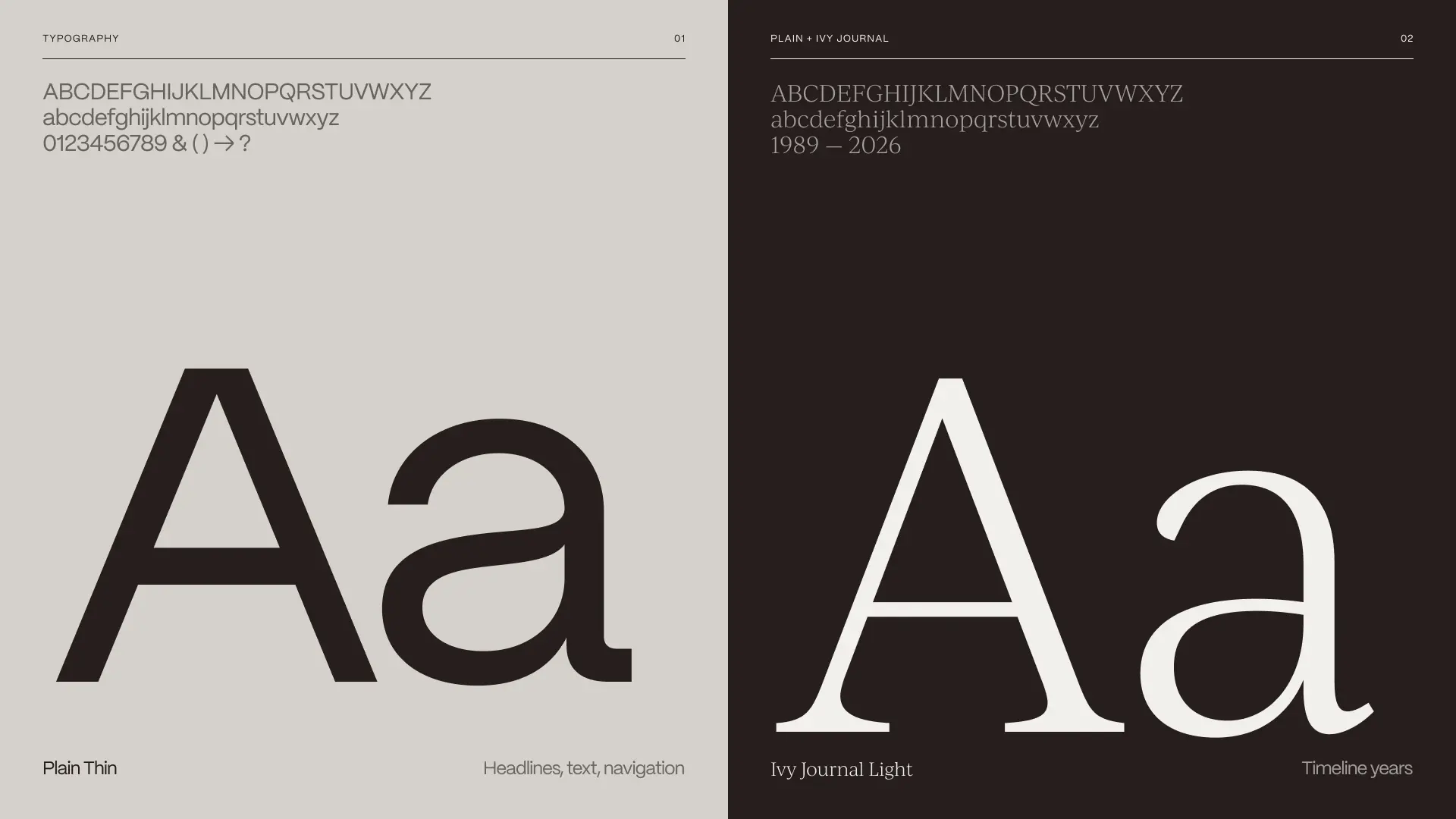
Behind every piece there are people. The About pages put the workshop’s faces and decades of history at the centre, from a horizontal timeline to portraits pinned across the page.
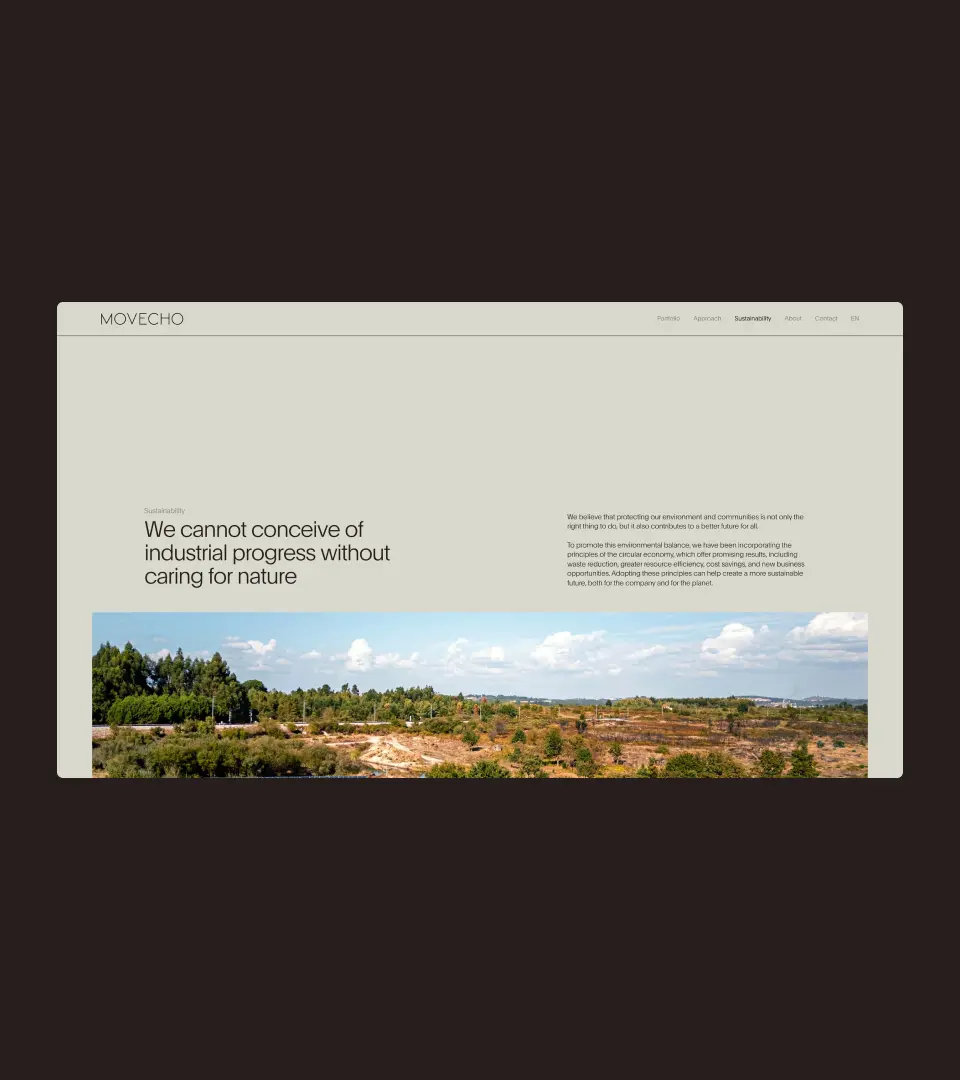
Sustainability gets its own chapter and its own tone: a softer green, wide landscape photography and clear cards that turn commitments into something easy to scan.